

A chafe won't send anyone to the hospital, but it can ruin a workout, a match, or a race you've been preparing for for weeks. The good news: almost all of them can be avoided with very simple steps. At Wabiks, we’ve sold over 400,000 pairs while tackling this problem, so here is what really works, sport by sport.


Chafing and blisters: they are not the same
A chafe is a superficial skin irritation caused by constant rubbing: it stings, turns red, and sometimes peels. A blister is the next step, when that rubbing separates the layers of skin and a fluid-filled pocket forms. They both share the same origin—friction—so preventing one prevents the other. Here we focus on chafing, but everything applies equally to preventing blisters.
Why does foot chafing occur?
Chafing occurs due to a combination of friction, moisture, and heat. The foot moves inside the shoe, rubs against the sock, that rubbing generates heat, the foot sweats, and the moisture softens the skin, which then becomes irritated much more easily. It’s a cycle: more moisture, more friction; more friction, more chafing.
Of those three factors, the one you control most is moisture. A dry foot resists friction much better. That’s why the first goal is always to keep the foot dry.

7 keys to prevent chafing
01
Technical socks that keep the foot dry
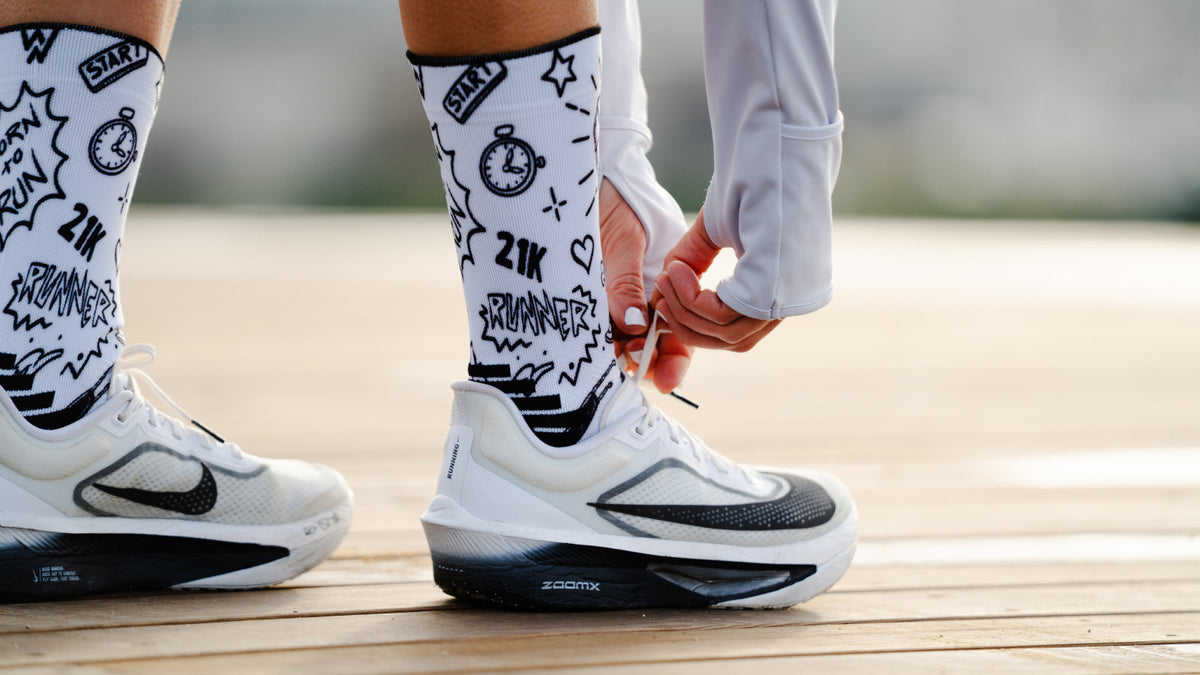
This is the #1 measure because it tackles moisture and friction simultaneously. Forget cotton (it retains sweat) and use technical socks with a seamless toe and good support. That’s exactly what we do at Wabiks with SoftAir+ fabric. → See anti-chafing socks
Gear that is your size and fits well
Anything that slides, rubs. Use shoes that are your size (leave ~a finger of space at the toe), and wear cycling shorts or leggings that are fitted without being tight. Loose clothing wrinkles and creates friction points.
03
Control sweat
If your feet sweat a lot, use talcum powder or antiperspirant before working out. Dry skin = less friction.
04
Lubricate trouble spots
In areas where you always chafe, apply petroleum jelly or an anti-chafing balm. It creates a layer that causes sliding instead of rubbing. A classic for long distances.
05
Don't wear new gear on an important day
New shoes, socks, or shorts should always be tested in short workouts first. New gear needs to adapt to your body.
06
Take care of your skin
Keep skin hydrated daily (not just before a workout) and free of calluses that rub. Healthy skin resists much better.
07
Act at the first sign
As soon as you feel heat or stinging in an area, stop and take action: reposition, adjust, or apply a dressing. Ten seconds will save you a week.
Tips according to your sport
🏃 Running and trail
The heel and toes are critical areas. Technical seamless socks, firm lacing (try the "heel lock" if your heel slides), and for trail, a higher cuff for terrain friction. → Running · Trail
🎾 Padel
Sudden stops and changes of direction cause the foot to slide inside the shoe. Here, support is key: a sock that doesn't move and properly tied shoes. → Padel
🚴 Cycling
Less impact, but many hours and lots of sweat. Prioritize breathability and a thin sock that doesn't crease inside the stiff shoe. → Cycling

What do I do if I already have a chafe?
Clean the area with soap and water, dry it well, and protect it with an anti-chafing dressing or a bandage that reduces rubbing while it heals. Avoid continuing to irritate it: if possible, change shoes or socks in the following days. If a blister appears, do not pop it unless it is large and painful (and then, use sterilized material). Monitor for signs of infection: redness that spreads, pus, or heat; if these appear, see a healthcare professional.
Frequently asked questions
Why do I get chafing even if I don't run much?
Do seamless socks prevent chafing?
Is petroleum jelly good for chafing?
Can I use the same sock for running, padel, and cycling?
In summary: control moisture and friction and chafing will cease to be a problem. The foundation is a good pair of technical socks; the rest is fit, lubrication, and common sense. Discover Wabiks socks →
Cómo evitar ampollas al correr